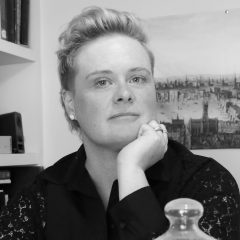

A personal post to see out Pride Month 2024.
It’s summer, 1997. My sixteen-year-old self is in their room, on the phone with their best friend, who says she isn’t interested in being friends anymore.
(This is a conversation I’ve been dreading, having sensed it coming for months – the gradual tapering off of phone calls, the resignation in her voice when I cancel plans, again. My best friend won’t fight for me. Truth is, I don’t even want her to.)
She says, “It seems like writing a book is more important to you than having friends.”
At sixteen, I didn’t have a lot of friends to spare. For starters, though I attended high school in downtown Pittsburgh I lived way out in what everyone referred to as “farm country,” a two hour bus ride away. And then there was the truly unconventional way I spent my free time. Every afternoon, as soon as I got home from school, I’d rush upstairs to my desk and barely move for the rest of the night. I was the only person I knew who wrote books – for fun.
It certainly couldn’t have looked like fun, from the outside. Most nights I ate dinner at my desk like some sad corporate drudge, squeezing in every last minute I could. Some time after midnight I’d crash into bed, get maybe four hours of sleep in before my mother woke me by shouting my name downstairs. Then another two hours to school, in the dark, during which I might write six pages in my head, tucking them into a mental folder to be opened again at the end of the day.
God how I miss that superpower now: the ability to hold whole texts in my memory, to summon them up hours or even days later with all the revisions and additions intact. It would really come in handy.
It came at a cost, of course. I expended so much mental energy keeping stories on ice that I had little left over for “normal” sixteen-year-old concerns. I was emphatically not a “normal girl,” and proud of it. But everything I knew about girlhood came from stories I absorbed through books and media, which were nothing at all like my reality. Girl stories, I thought, were about going to the mall, vying for the attention of boys and counting calories, despite the heroine always being thin, blonde, popular; or maybe unpopular but thin anyway, pretty if she takes her glasses off. Before the story ended, she would learn lessons about the importance of loyalty, forgiveness, sacrifice; the transformative power of a new dress, the transformative power of dropping five pounds.
Above all, in every story, the girls were always surrounded by friends, typically three or four, each with her own small, inoffensive quirks, who were there when the heroine’s story began and would be there till the end, standing by her side with blank smiles, their own stories (if they had them) tidily and expediently resolved.
In hindsight, I think girl stories made me uncomfortable because they were all about being visible, about being consumed. The heroine survives or triumphs because she steps out into the world with arms wide open, having done the hard work of changing herself to please others, or (more rarely) the even harder work of accepting herself.
You could say that girl stories are often “coming out” stories.
Girls almost never figured into the stories I wrote at sixteen. The book I’d spent my whole summer working on, instead of hanging out with my best friend, was a sprawling bildungsroman, loosely based on a true story, about an autistic painter who escapes a Soviet mental institution and defects to the United States. The next summer it would be a historical thriller set in 1899 about a traumatized gay man who builds a vast city underneath Manhattan as a respite from the surface world. After that, there would be a fantasy trilogy in which Lucifer and Jesus Christ are the same entity, and in order to save humanity, they must rally angels and demons alike to kill a smite-happy God.
All my stories were about escaping, defecting, retreating, un-making, un-doing. They were the opposite of “coming out.”

At sixteen, I didn’t yet know I was queer. Correction: I’d known I was queer even before I’d ever heard the word, but over time I’d managed to wipe that knowledge from my mind. It was a matter of survival. I lived in a town with more churches than supermarkets. Not long before that fateful phone call with my best friend, I’d had to switch schools for the second time in four years because I was acting out, destroying school property, self-harming. The first time, I had been bullied so badly the teachers themselves had suggested my parents find another school for me – I had been essentially run out of my home town, or at least my public school district.
At sixteen, I didn’t yet know I was queer, because even though I compulsively wrote characters who loved or existed unconventionally, changed genders or were genderless, I didn’t live in a world where queer was something I could be. Queer was for other people. (It was the 1990s, so, tragic, doomed people.) But writing was a place where I could safely try on different versions of myself. Some of my characters were parts I stepped into as if for the stage. Others stepped into me. Gradually, I came to recognize which ones brought me strength, or confidence. I started to crave their visitations, to grieve them when they were gone.
My senior year of college, one character would set up shop in my head, and not leave until I’d done him justice. An Elizabethan playwright whose name I’d heard in my early teens, and whose story I’d never been able to forget – Christopher Marlowe – came storming out of one of my mental folders, dragging four-hundred years’ worth of queer rage at having to escape, to hide, to un-make ourselves along with him.
Ultimately, it would take me twenty years of multiple false-starts, failed attempts and “life stuff” delays, but when the dust finally settled, I would be holding Lightborne, my first published book. And I would not be alone: standing to either side of me would be the friends who had never stopped cheering me on, the fellow writers who gave me their time, the partner who gave me all the love and patience I could possibly ask for. I would not be alone in the dark any longer.
Up in my bedroom on the old cordless phone, my sixteen-year-old self has no idea how long it will take, or how much will be lost and gained along the way. They can’t imagine going more than a day without writing, but being published isn’t necessarily part of the plan. They write to live.
When their best friend says, “writing a book is more important to you than having friends,” she sounds as if she pities them. Maybe it is sad. A sixteen-year-old kid who spends all their free time locked away in a room, and who, to be honest, has only one friend in the world. Reality is, it’s 1997 and this kid should be begging their parents for a pager or Alanis Morissette tickets; reality is, this kid survives one day at a time, by pretending they are a stateless refugee, or the queer king of an underground realm, or some half-divine, half-demonic creature, at war with an unjust God. Reality is, this kid survives by being anything but what the world sees when it looks at them.
So, sixteen-year-old me tells their friend, yes – writing a book is more important to them.
And their heart sinks as they say this, realizing they can never take it back. But after sitting with the dread for a few minutes, in the silence after they hang up the phone, it dissipates. They’re at their desk, in their room. Their book is on the screen in front of them, flickering white, like a hearth that burns cold.
I want to tell them: twenty-seven years from now, I promise you, it will have been worth it.
Not because you’ll publish a book.
Because you’ll find out who your real friends are.

 HESSE PHILLIPS