Before we get into the thing you’re actually here for, let me start this one off by saying, if you’re not listening to the 7AM Novelist Podcast with Michelle Hoover, then start now – not just because yours truly makes the occasional appearance on the show, but because I do so in excellent company. This latest season features an all-star cast, including Anjali Duva, Ron Maclean, Nancy Crochiere, Sara Johnson Allen, Marjan Kamali, Joanna Rakoff, Emily Ross, Andrea Meyer, Virginia Pye, Henriette Lazaridis, Colwill Brown, Crystal King, Chris Boucher, Dawn Tripp, Hank Phillippi Ryan, Mark Cecil, Jenna Blum, Jane Roper, Ethan Gilsdorf, Whitney Scharer, Shalene Gupta, Louise Miller, and many more, all ready to help struggling writers work through whatever’s holding them back from getting words on the page.
Recently there were two back-to-back episodes dealing with the stressful process of publishing your first book, as Aube Rey Lescure hopped on to discuss the launch of her debut River East River West, and Kasey LeBlanc, Christine Murphy, and Aaron Hamburger came on to talk about the travails of starting book 2. Listening as someone who can relate all too well to the topics at hand, I found my mental state veering wildly between excited and despairing, inspired and terrified.
Let’s be real: publishing a book is the thing we writers tell ourselves will finally make our lives fall into place, fix our self-esteem issues, vindicate our hard work, even solve lifelong crises of identity. For over a decade, it was the thing I felt I had to do, if only to justify the time and money I’d sunk into writing my soon-to-debut novel, Lightborne. And of course, I am thrilled beyond belief that it is finally happening. But I’m also learning that publication will fix absolutely none of the above problems. It will, in fact, create a few new ones.
Now that debut authors are speaking more openly about the mental health struggles they face in the lead-up to pub day, what emerges is the clear need for us to support one another. The tawdry, soul-crushing business of self-promotion can feel desperately lonely; the burgeoning public exposure can make you paranoid and crash whatever modicum of self-esteem you’d built-up since surviving high school. The dark, primal urge to dig yourself a burrow and hide in it starts to take over.
But this is why community is so essential to the debuting author. It may come via social media, or through writing groups and classes, or – just maybe – through fellow listeners of a writing podcast. I’m very fortunate to know many of the panelists on the 7AM Novelist through the legendary Boston writing center, Grub Street, where I participated in the Novel Incubator Program some [cough cough] years ago. But one of the great things about the 7AM Novelist is how it allows writers from all around the world to make connections. Seeing ideas exchanged and friendships forming in the chat box during every live episode recording truly warms this withered old heart.
So I very much hope anyone reading this will be sure to check out the show and support the author panelists: google them, subscribe to their newsletters, buy their books! This season is particularly exciting because every episode deals with questions submitted by listeners – even though I’m on again tomorrow, Jan 11th, I still don’t know what topic we’re going to get. So if you have a sticky issue to work out with your WIP, your writing practice, or career, please do go to the podcast page and submit your answer to the question, “What’s holding you back?” Maybe I’ll even get a chance to help you through it.
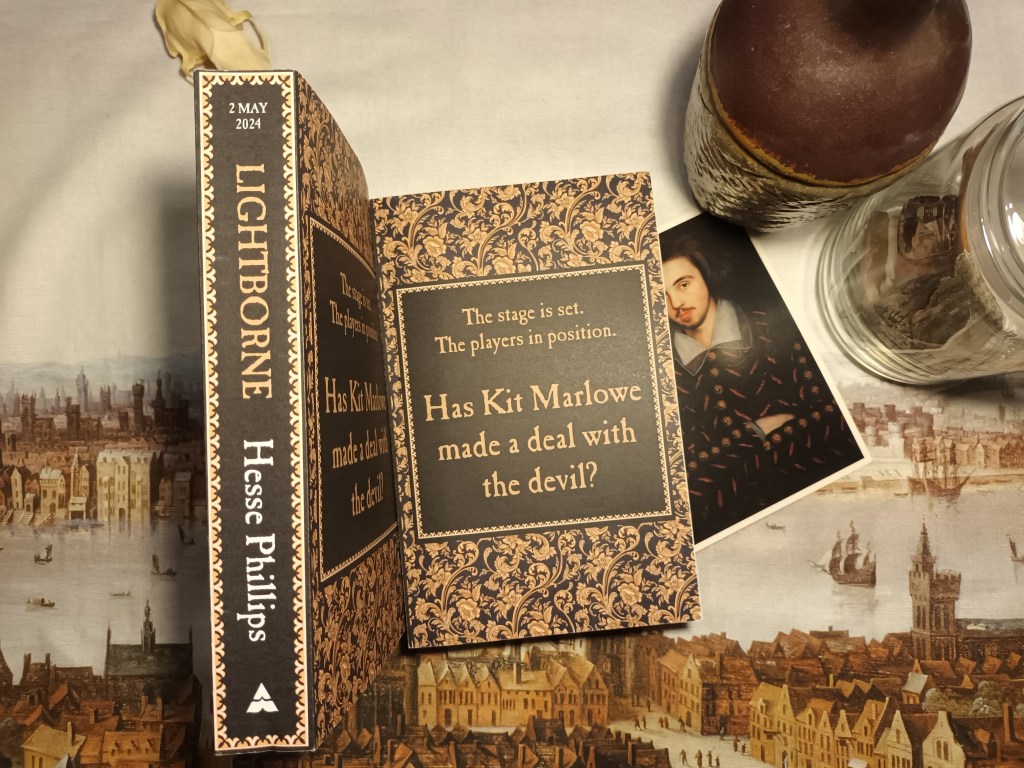
And now that you’ve scrolled all the way down here, you may collect your reward: a first look at Lightborne’s lush, evocative final cover!
Via Atlantic Books
As you can see, the cover will build on the proof design, using the same black and gold damask pattern and a simply gorgeous font based on 16th century typography. I’ve been informed that the pattern will, in fact, be stamped in gold foil – so in person, it’s going to be stunning!
Preorders are rolling out, so please check with your local booksellers. For those who use NetGalley, ARCs will be available soon.
I may be technically “done” with LIGHTBORNE, my first novel, but it seems like the research just isn’t done with me. After years – too many years – spent scanning documents for familiar names, I am primed to pick them out from just about anywhere. Every now and then, an old ghost steps out of the shadows, and the hair stands up on the back of my neck.
Today, the old ghost’s name was Nicholas Skeres – one of the three men who were present when my protagonist, Christopher Marlowe, was murdered in 1593. Just as the motives behind Marlowe’s death carry an air of mystery, all three of the chief witnesses/accomplices/perpetrators are enigmas in one way or another, which naturally I have exploited the hell out of for narrative purposes. Robert “Robin” Poley was a spy with a frighteningly dark history; Ingram Frizer, who wielded the fatal weapon, was a servant who worked for, of all people, Marlowe’s friend and patron.
Within that shady crew, Nick Skeres was always the one I felt I didn’t need to worry about. His youth as a con-artist, cutpurse and thief is well documented, and his later work as a lackey for important people, like the Earl of Essex, seems clear enough. In all likelihood, he was probably a pretty nasty character. Look him up in Charles Nicholl’s THE RECKONING, an admittedly more than slightly problematic investigation into Marlowe’s death, and you get the confident assertion that he was “Walsingham’s man” – in other words, a government spy. Look him up in other biographies by David Riggs, Park Honan, Constance Brown Kuriyama, F.S. Boas, all the way back to Ethel Seaton, who first identified Skeres’ name in connection with espionage way back in 1929, and you find the same conclusion.
So, why is Nick Skeres suddenly weighing on my mind?
Well, while doing some research for book #2, I happened to run across a reference to “Skyrres” in a letter connected to the Babington Plot. The Plot features heavily in LIGHTBORNE – a convoluted conspiracy which drew in Catholic priests and sympathizers from all across England and beyond, ostensibly spearheaded by the young, impressionable, and loaded Anthony Babington (although it is far more likely that Babington was merely a patsy). The goal was, in a nutshell [*inhales*], to jailbreak Mary, Queen of Scots, transport her to the Continent, hook up with the French Catholic and Spanish armies and lead an attack against England, eventually overthrowing Elizabeth I, installing Mary in her place and restoring the official state religion to Catholicism.
The scheme felt harebrained from the start, and Elizabeth’s spies, under the aegis of Sir Francis Walsingham, her “Spymaster,” were all too happy to let the would-be plotters walk themselves straight into their clutches… which, spoiler alert, they totally did.
In the weeks that led up to the Plot’s final, tragic unravelling, Babington and his friends were frequently on the move between bases in or around London. In August of 1586, right before Walsingham finally sprang his trap, his secretary, Francis Milles, wrote to him about people whom he’d seen hanging around the Catholic safehouse where Babington was believed to be hiding out:
Alt Text: Screenshot from The Troubles of Our Catholic Forefathers as Told by Themselves, 1872. A highlighted section reads, “Bab., Donne, Skyrres [?], and some others both men and women of this crew I have discovered this day with my own eyes, and therefore seeing Bab. is not departed, I hope for the better success of this service.”
Until a few weeks ago, I’d never read Milles’ letter myself, but I’d read about it. If “Skyrres” was our Skeres, then he wouldn’t have been the only one present at Marlowe’s death to have also been embroiled in the Babington Plot. Robin Poley was, in fact, Walsingham’s chief instrument in taking Babington down. What I find interesting here is the way that Milles talks about Skeres: as one of Babington’s “crew,” seen with his “own eyes,” and taken as proof that Babington is “not departed” – in other words, also present at the house, though unseen.
Milles’ letter in no way treats Skeres as separate from the other conspirators, like “Donne,” i.e. John Dunne, who was soon after convicted of treason and hanged along with Babington. If Skeres is mentioned “without further comment,” as Nicholl says, then so are they. If anything, Milles’ letter suggests that, whatever our Nick’s reasons for being amongst Babington’s “crew,” they might not have been so cut-and-dry as previously assumed.
Was Skeres a double-agent, not entirely trusted by either side? Or was he, perhaps, an apostate – a Catholic sympathizer who would soon betray his own cause?
Whatever the case, if Nicholas Skeres was in the employ of Sir Francis Walsingham in 1586, then Francis Milles, as Walsingham’s personal secretary, should damn well have known about it. The letter, to my eyes at least, suggests that Milles had another understanding about him entirely.
Skeres virtually disappears from the record for three whole years following this sighting by Milles. That might not be a red flag in itself, as paper-trails frequently go astray in this period, and the aftermath of the Babington Plot was every bit as chaotic as its advent. When our Nick resurfaces, he is working as a messenger for both Walsingham and the Earl of Essex, meaning that he is firmly entrenched in government employment. Did he serve faithfully? Who can say. As it happens, Skeres would eventually be arrested in connection with the Essex Rebellion – another attempt to overthrow Queen Elizabeth – and probably ended his life in prison.
How is any of this relevant to the murder of Christopher Marlowe – the one we actually care about?
Well, the uncertainty surrounding Marlowe’s death has really been something of a plague on Marlowe studies. It’s the mystery everyone wants to talk about but no one really wants to solve – because if we solve it, then we won’t get to speculate anymore. After so many hundreds of years, answering the problem would hardly feel like justice, but rather more like killing poor Kit Marlowe all over again.
Most of the biographers I mentioned above ascribe to some version of the theory that Marlowe’s murder was a grand conspiracy, orchestrated by the government or some other powers-that-be.1 The thing is, though the circumstances of Marlowe’s death are in fact pretty suspicious, there’s no “smoking gun” that proves it was a hit-job. There are, I think, reasons to believe his murder was swept under the rug, but that does not necessarily mean it was planned from on-high. All it means is that someone was protecting the people likely to suffer consequences from it: Poley, Frizer, and Skeres. The people who were actually there, in the room where it happened.
A notorious spy and rumoured assassin. A servant of Marlowe’s friend. And, a man long presumed to be a government spy, whose motives, loyalties, and ambitions may be far murkier than previously assumed.
If that’s who Nick Skeres really was – and Milles’ letter certainly makes a case for it – then our picture of the scene of the crime shifts towards something potentially more personal, and far messier, than a state-ordered assassination. Why were these particular people there? What was Marlowe’s connection to them? What did they want with him?
This is all perhaps just a very (very) long way of saying that the work goes on. I’ve already written my version of Nick Skeres, who is every bit as shady as you’d expect. But the novel I’ve written is not about proselytizing my version of “what really happened.” I’m not so interested in that. Fiction is about asking questions for which there are, ideally, no clear answers. Even historical fiction, despite having one foot in Fact, takes events or lives that were momentous and singular to those who lived them, and – rather heartlessly – scavenges them for parts. The dead, long gone, exist only in fragments from which we storytellers glean what we may, and (like conspiracy-theorists) straight-up bullshit the rest.
Photo by Hesse Phillips. Yes, it was fun.
Oh yes – in case you missed it, LIGHTBORNE is an ARC now, and looks very fetching in gold, if I do say so. I’m told that copies will be available on NetGalley soon!
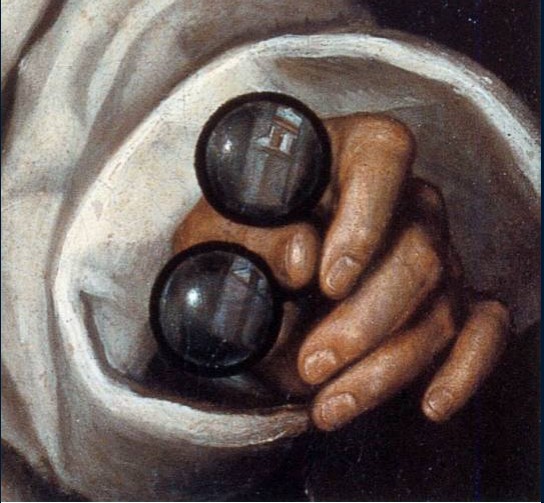
Featured image: Fede Galizia, Portrait of Paolo Morigia (detail), Public Domain, Wikimedia Commons
Brown Kuriyama is an outlier here for her “no-nonsense” approach, i.e., taking all of the documents and testimony associated with Marlowe’s murder completely at face-value, for better or for worse. ↩︎
Last week I had the immense privilege of visiting my publisher Atlantic Books’ offices in person. Little did I know when I was making aimless circles around Bloomsbury, hopelessly lost, that once I got there I would be greeted by printed, jacketed, ready-to-go ARCs of my debut novel – a whole pile of them awaiting my woefully unpracticed signature.
Photo by Laura O’Donnell
I’d been convinced that the ARCs were still weeks away, if not months. Being able to pick up a copy, flip through the pages, and see what I’d thus far known only as a Word document looking very much like a real book put me into some kind of fugue state. I barely remember signing the copies, only that my signature degenerated steeply from one copy to the next. By the time I got to the last one it looked like a toddler had scribbled all over the page.
Of course I’m still excited and riding high from the experience, although an astonishing amount of terror has since crept in. Things are moving quicker than I’d expected, which means my little window of peace and privacy is closing, and not only must I come to terms with the fact that the need to self-promote is inevitable, but it is also imminent. As in, I clearly should have started doing it weeks ago.
I think many writers break into a cold sweat at the thought of having to put themselves “out there,” whether it stems from a simple dislike of the spotlight or the crippling, unshakable belief that we are not worthy enough or smart enough or good enough, and sooner or later the world will catch on and punish us for daring to take up space. The latter is certainly true for me. The law of impostor syndrome is that the voice of self-doubt will always grow louder and stronger when presented with mounting evidence that it’s really full of shit. (Much like people who are full of shit.) The closer I come to any kind of success, the easier it is for me to convince myself I’m not deserving of it.
The most constructive way I’ve found of dealing with impostor syndrome so far is to think of it as a necessary stage in the process of working towards a goal, and moreover, a sign that things are, in fact, going pretty well. This doesn’t silence the voice of self doubt, but it does put it at a slight remove. Fortunately, I’m riding a train over whose path I have zero control, which means I have no choice but to keep moving forward. It’s surprisingly easy to be braver about taking certain steps once the option of turning back is gone.
Besides, the scenery really is lovely. Look at this, LOOK AT THIS!
We’re just about into that incredibly exciting stage where things start getting printed on paper – meaning that I’ve recently received the most important pdf file of my entire existence so far, and have spent the past week going over it with a fine-toothed comb. It feels weirdly unceremonious to see my proof sitting open in a Chrome tab along with email and about 50 other tabs worth of research for my next book, as if it were just another JSTOR article that I stopped skimming last week and forgot about.
Fortunately, it is gorgeous, as you can see from the image above. I’m thoroughly impressed with my publisher’s choice in fonts, all of which are wonderfully evocative of Elizabethan-era typefaces. And then there’s the uncanny resemblance between the header font and the tattoo on my right forearm:
Yup, that’s me, in my bathroom, because let’s face it, it’s the only room in the house with good lighting. You can probably tell from my face that I’d just spent two hours getting stabbed with tiny needles.
I got myself the tattoo last year to celebrate signing my deal with Atlantic. A more superstitious person than myself might take the resemblance as some kind of omen. Lente currite noctis equi (“run slowly, horses of the night”) is a phrase that originally appeared in Ovid’s Amores, a series of quite randy love poems which my protagonist, Christopher Marlowe, translated into English as a student at Cambridge. It also, and perhaps more famously, appears in Marlowe’s own play Doctor Faustus, used by the titular character as a magical incantation in effort to halt time in its tracks. Notably, the incantation does not work – Faustus can’t escape his deadline with the Devil, who promptly shows up and drags him screaming into hell.
So, uh, not sure whether that’s a good omen or a bad one, but it is at least a lovely coincidence.
From here, the next stage is to print ARCs (advanced reader copies), which will hopefully lead to some nice endorsements from people far more interesting and successful in life than myself. After that, we’ll begin work on the final text for publication in May, at which point my book will truly have grown up and moved out of the house for good. For now, it’s thrilling to see it all dressed up in a spiffy new suit, looking very much like a “real” book, albeit in digital form.
Things are definitely heating up, so hopefully I’ll have more news to share soon!
If nothing else, I am learning a lot about my worst habits as a writer, and I suppose this knowledge ought to come in handy down the road. The first editorial phase was instructive on a global scale, subjecting characters, plot and overall themes to forensic examination. I came away from it feeling like I’d just gotten a free MFA in creative writing. The copy editing stage, however, will humble you up in a heartbeat.
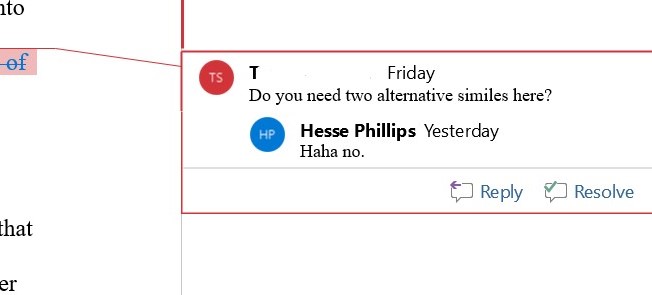
What impresses me the most about this part of the process is the indefatigable patience of copy editors, who can turn over a page of prose the way a seasoned detective turns over a crime scene. Invariably, if something is out of place, they will find it. At the moment, I’m so highly attuned to the incorrect usage of hyphens that I agonized for a good several minutes over whether or not to hyphenate “highly attuned.” As you can see, I gave up.
Sighs, for that matter, are starting to give me eye-twitches. I can’t let out an audible breath without wondering whether I should just go back and delete it altogether; no exhales for me, only inhales from now on (passes out).
Well, as my extremely generous copy editor has reminded me, all writers have their tics. Even the great Cormac McCarthy, as this Electric Literature article reminds us, had a “smiling” compulsion (though naturally he sometimes managed to make gold out of it).
I suppose the copy editing stage is a little like seeing a doctor – embarrassing but necessary for your health. And in my case, I feel confident that my work is in good hands. Now to try as hard as I can to retain all of the insights I’ve received for the next big thing.
Although I still have no idea how to use hyphens. Did I promise to learn? Yes. Will I?…
I’ve just handed-in my first batch of revisions to my wonderful editor at Atlantic Books, and I suddenly find myself with nothing at all to do, book-related, for the next few weeks. This is the process, as I’ve found it: lots of short bursts of grinding work that’ll keep you either manic or paralyzed with anxiety, until, suddenly, it’s all over. Now, to wait.
The road to publication begins with so much fanfare, so much excitement, that the subsequent long periods of seeming inertia can easily drive you batty. You feel as if you’ve lost momentum, or you’ve been forgotten about, or (worse) you have forgotten to do something, and the silence closing in is all your fault. But as I sit here writing this, there’s a whole machinery at work on my book, behind the scenes: editing, cover-design, publicity, rights-management, and more. For me, it’s all peaks and valleys, but for the publisher, it’s a slow, steady ascent towards Launch Day, when the real rollercoaster begins.
After all the excitement of signing my contract at the end of last year, life became relatively quiet. So quiet, in fact, that I found myself with time enough to start working on the next book, if for no other reason than simply to keep busy. Now that we are just past one year out from publication (in spring 2024), things are finally picking up again. I’ve had two weeks to work on changes to the manuscript, which might possibly have been the most stressful two weeks of my writing life. I kept having visions of that day every writer should look forward to: opening a great big box full of fresh, gorgeously bound copies of my debut novel, only to look inside one and immediately find a sentence I loathe staring back at me, set in stone.
Fortunately, my last opportunity to fine-tune has not yet come and gone – and the last round of edits will have the watchful eye of a copyeditor involved, so the responsibility of catching all those overwrought metaphors and wonky adverbs will not fall to me alone. Lightborne remains, however, my baby, something about which my editor was very clear: the goal is to end up with a book that makes us both happy. Having both seen and heard horror-stories about inflexible editors, I know am very lucky to have one who actually trusts me. (Now, whether or not she should…)
So, for the next few weeks, I will be trying to forget about Lightborne for a little while so that my editor can do her job in peace. But once this pause ends, I’ll likely be facing down the most intense weeks of work I’ve ever spent on this book. (And I’ve spent, um, A LOT of weeks on it.) Soon, hopefully, there will be a cover to look forward to, followed by more edits, final edits, printing and distributing ARCs, convincing nice people to say nice things we can put on the cover, convincing nice people to say nice things on TikTok… And in the midst of all that there will be little ol’ me, who barely knows how to tweet and uses Instagram mainly to share pictures of my dogs, doing the WB Frog dance and looking forward to my next nap. Maybe I should just enjoy the silence.
Featured image: A sample of Lightborne’s protagonist, Christopher Marlowe’s handwriting (Wikimedia Commons)
This post originally appeared on Dead Darlings 28/2/2023.
Let’s start with the good news before we get to the complicated feelings: my debut novel Lightborne is coming out next year. And I am ecstatic!
Lightborne is a historical novel about Christopher Marlowe, an Elizabethan playwright and contemporary of Shakespeare who died violently and young, under somewhat mysterious circumstances. Rumored to have been a government spy, famously brash and outspoken, the author of the first play in English to feature an explicitly queer relationship between men – I fell in love with Marlowe the first time I discovered him, at thirteen or fourteen, and from that point on it was only a matter of time before I tried to write a book about him.
I could not possibly have known, when I finally got started in my senior year of college, that I would spend the better part of the next twenty years writing about Marlowe.
The thing is, I misspent my youth writing “novels” – practice novels, I think of them now – one after another, often only to chuck them in a drawer after just three or four drafts. Lightborne, however, was different. Over two decades – half my life, really – I compiled hundreds of hours’ worth of research, wrote and scrapped something like five different novels about Marlowe, made forty-plus revisions to Lightborne, and slogged through rejections in the triple digits. To say Lightborne was “a labor of love,” as I’ve been saying repeatedly ever since the good news became public, feels like understatement.
I had plenty of opportunities, and every reason, to stop. Put it in the drawer. Work on something else. So why didn’t I?
Love did have something to do with it. I loved Lightborne, and I loved writing it. I loved “my boys,” as I often refer to the three main characters, despite having done a great deal to torment them. For years on end, I’ve agonized over these (mostly) made-up people’s lives, at my desk, on the couch, wide awake at 4am, lying on a beach, wandering around the supermarket… They say, “A writer never stops writing,” and that is devastatingly true. All other thoughts become intrusions, as does life. Only love makes you that stupid.
But it was also labor, with all the pain that implies. I’ve lived so long now with the anguish, not of disappointment or failure, but of hope – terrible, all-consuming, sadistic hope – that I don’t quite know what to do without it. A writer never stops writing – and part of that is convincing yourself that it will all be worth it one day: that one day, finally, you will stop.
So this is the end. After two decades, I’ve stopped writing Lightborne. This is a celebration, but it’s also a eulogy: for the work, for the hope, for the task I just had to complete, which began as all eulogies do, with death.
Twenty years ago, this October – a few months before my first attempt to write a novel about Christopher Marlowe – my friend died. At the time, I was already working on an undergraduate thesis about Marlowe’s play Edward II, and the queer canon, and the task of finding ourselves among the dead. Then my friend died. Soon after, my thesis began spilling over into a novel on the side – nothing at all like Lightborne as it stands now, except perhaps in two key ways: that it was about a young, queer man who dies far too soon; who, in life, was widely loved but misunderstood, and sometimes vilified. And, it was about bearing responsibility for his death.
I dedicated even that first messy, embarrassing draft to my dead friend. “In memory of.” Through all those years, for each new draft or entirely new version of the story, the first thing I would do upon opening a blank document was copy/paste that dedication. Looking at it, I could imagine the words printed in a book, with some stranger out there holding it in their hands, reading my dead friend’s name. If nothing else, the dedication page was a way of holding onto the original impulse that brought me to tell this story – to always be writing, but to always be writing towards an end.
The thing about the dead is, they are never satisfied. Never appeased. For us, they exist in a state of arrest, with the last thought, the last gesture, the last sensation frozen in time. I think one of the reasons why we write is to capture every fleeting thought or action as if it were the last, to nail the seconds to the wall so we might pore over them from every angle: catalogue every detail, ask every question, draw a circle around every mystery. Of course, the final stage of writing is to let all of that go and give the story to whomever wants it, for them to envision and interpret as they see fit. Which I suppose is a kind of resurrection, a kind of life.
That’s the joy, amidst all this excitement and terror and uncertainty: the joy of knowing there will be life for this story beyond my little brain, there will be life for my boys. One day – surely sooner than it seems to me now – a stranger will open a book that says Lightborne on the cover, and their eyes will glance briefly over the name on the dedication, “In memory of”: multiple names now.
And then they will turn the page.
Lightborne will be published in the spring of 2024 by Atlantic Books UK.
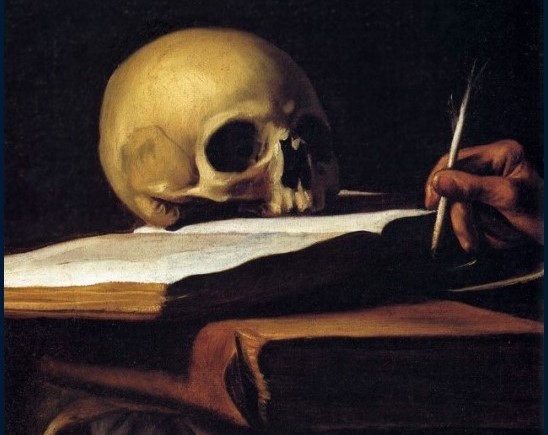
Image: “St. Jerome Writing” (detail) by Caravaggio, Wikimedia Commons
Yesterday I made my podcast debut on Michelle Hoover’s brilliant, informative, possibly life-changing “7AM Novelist” series – a 50-day writing challenge designed to give new and experienced writers the tools they’ll need to write a solid first draft. Michelle was my instructor at Grub Street Boston, through the Novel Incubator and the Novel Generator, so I can’t recommend her podcast highly enough to anyone who dreams of writing a book.
I was on along with Louise Berliner, author of Texas Guinan: Queen of the Nightclubs, to talk about how to handle setting and time period in your early pages. As often happens when you only have half an hour to talk about a topic, I signed-off positively bursting with still more to say, so I’m doing what I suppose any one of us would do in that situation: blogging about it.
From Michael Drayton’s Poly-Olbion (detail), Folger Shakespeare Library
Our conversation started from Louise’s wonderful idea of setting as a “container,” which characters bump up against throughout the story – a site of conflict, struggle, and most importantly of all, drama. Often, writers will make the mistake of thinking of their setting as more or less static, a blank set onto which their characters are air-dropped. But whether you’re writing historical, sci-fi/ fantasy, gothic horror, or contemporary literary fiction, the “setting” in a novel should be dynamic, a hybrid of both time and place that moves and is moved by the characters.
We’ve all heard of or read books that treat setting like a character, but what exactly does that mean? How is it achieved? All novels begin with what some writers refer to as the “Unstable Ground” situation – a nomenclature which, by no accident, suggests setting. In the opening pages, we find ourselves amongst certain people on a particular day, one where something big will be set in motion. Whatever happens, it doesn’t just happen in any time or place, but on this day and no other, in this very spot and no other.
Take Virginia Woolf’s Mrs. Dalloway, for example, which takes place on one particular day. “Mrs. Dalloway said she would buy the flowers herself,” is one of the most iconic opening lines in all of literature. Over the next few pages, we learn that Mrs. Dalloway is part of a culture that is desperately trying to return to a setting that no longer exists, i.e., pre-WWI Britain. As she moves through what could easily be a perfectly ordinary day – buying flowers, sewing a dress, taking a nap, throwing a party – her story becomes entangled with the ghosts of war. Her search for the comforts of the ordinary is constantly interrupted by reminders of all that she and her country have lost, in the form of supporting characters like the shell-shocked veteran Septimus Smith, whose visions of the battlefield create a sense of constant instability in the landscape of London.
Mrs. Dalloway and Septimus Smith represent the opposing forces that come together to create dynamic settings: status quo versus change. Or, the “unstoppable force” meeting an “immoveable object,” if you prefer. Each character is embattled within themselves just as they are against the world: wanting to move on by going backwards, which is, of course, impossible. Spoiler alert: it costs Septimus his life.
Woolf’s setting for Mrs. Dalloway was her own present day. For historical fiction, setting takes on an even larger presence, firstly because it is always unfamiliar to the reader. Every author will interpret history differently, choosing to emphasize certain details over others, offering different answers to historical mysteries, or characterizing historical figures differently. Each year, about a dozen novels based on the life of Anne Boleyn come out, and yet no two feature exactly the same take on their protagonist.
Historical fiction is where the “setting as container” notion really comes into play. This is partly because, as modern writers, we are ourselves frequently in conflict with the era that we are trying to bring to life. Hilary Mantel likened this task to “chasing ghosts” – although in her words, the ghosts often chase us back. It is through these conflicts between the author and the past that we often find our way to the characters’ conflicts with their own time. In my case, Lightborne is about queer men living in an era fraught with dangers for anyone stepping outside the status quo, and so their conflict with the setting is quite literal. Many books of historical fiction feature protagonists who don’t exactly “fit” into the world around them, and thus offer ever-fertile ground for stories about outsiders.
Historical fiction and sci-fi/ fantasy books also often come with a map somewhere in the opening pages. This is partly because the settings are so unfamiliar to average readers, but it’s also a consequence of just how important the settings are to these stories. The landscape of Middle Earth or the streets of medieval London shape who the characters are and who they are becoming, while also being shaped by the characters throughout the course of the novel. The maps represent both time and place.
There is no escape from the hours and the days. Neither from tomorrow, nor from yesterday. There is no escape from yesterday because yesterday has deformed us, or been deformed by us.
Samuel Beckett, Proust and Three Dialogues with George Duthuit
I think this is a good quote to keep in mind when working on setting. Every novel begins with Unstable Ground – the time and place when the story is propelled into being by circumstances that exist even before page one. After that, the ground continues to shift – time and place “deform” the characters as they pass through it, and are “deformed” by their passage. As the ground shifts, details will emerge, pathways will be uncovered, exits will be blocked. The setting is alive – and has a big role to play.
Of course there’s still plenty more to say about setting. WAY more than I can fit here. Another post, perhaps?
But if you actually bother to go through all the myriad files within files squirreled away in the recesses of my laptop, it amounts to something more like four or five books. Four or five books, some weighing-in at over 400 pages, just to whittle it all down to ONE.
This is not as unusual as you might imagine. Depending on what kind of writer you are, what kind of book you’re writing, and what kind of support is available to you, the sum total of words you generate towards completing a novel might be thousands or hundreds of thousands more than the finished product. Sometimes you fall down rabbit-holes, and sometimes…
Sometimes you have to go a long distance out of the way in order to come back a short distance correctly.
Edward Albee
Werner Holmberg, Landscape from Leppälahti in Kuru, Unfinished, Wikimedia Commons
Throughout the process of writing Lightborne, I wrote a hefty historical fiction novel centered on William Shakespeare; tossed it out, then wrote something quite ambitious, a novel which alternated between the 16th, 17th, and 21st centuries; trashed that, then wrote another novel, alternating between just two time-periods this time – and oh yes let’s not forget the TWO MORE hist-fic novels I wrote after that, by which time Shakespeare had long since disappeared from the book (except in a blink-and-you’ll-miss-it cameo), and Christopher Marlowe was the main character. This isn’t even counting the numerous revisions that each of those earlier novels went through before being unceremoniously scrapped and scavenged for parts.
So what was it that finally got me to “done?”
Depends on how you define “done.” The thing about writing a book is that the goalposts are always moving. Even as I write this, I know my book will likely go through still more changes before it (fingers crossed) ends up on a shelf at Waterstones or Barnes & Noble, as even a publication deal is rarely the end of revising. Another quote springs to mind:
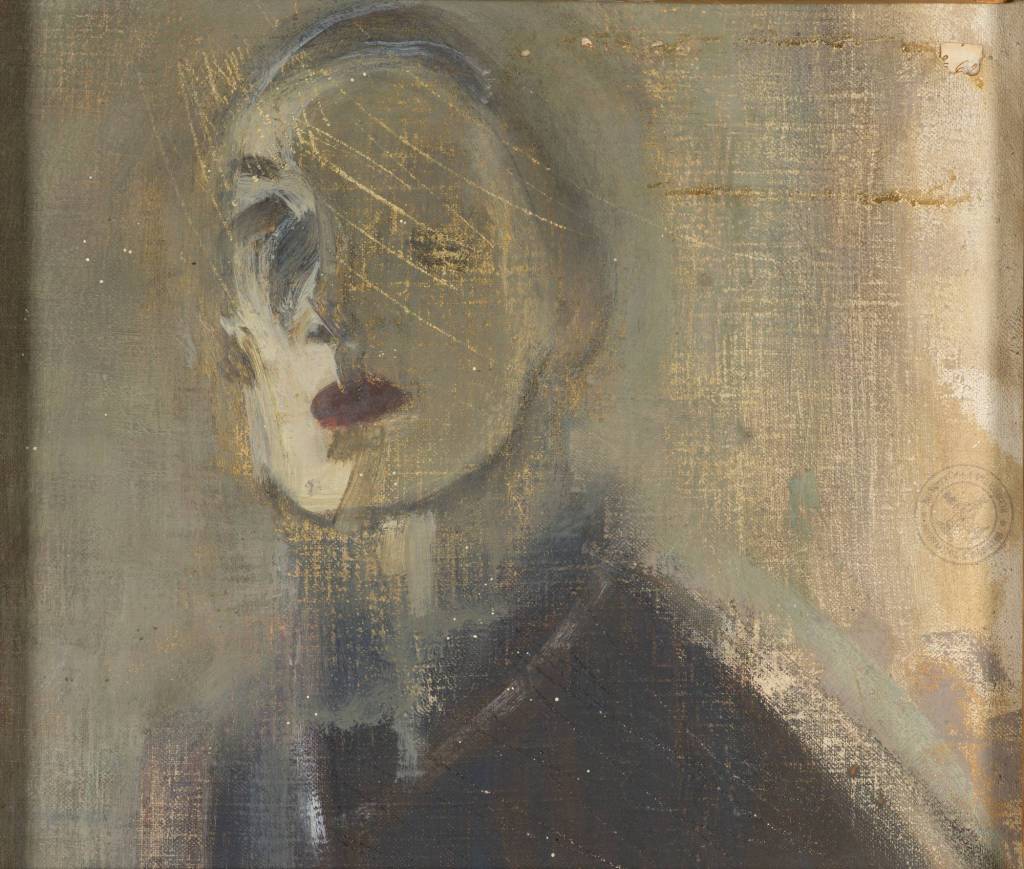
A painting is never finished. It simply stops in interesting places.
Paul Gardner
Helene Schjerfbeck, Unfinished and Defaced Self-Portrait, Wikimedia Commons
Painting and literature may seem like very different mediums, but all art shares some DNA in the process of its creation. Anyone trying to make art goes through a trial of false starts, erasures, making, and remaking. In all art there is is a discovery process, where at times you think you know where you are going only to find yourself going in circles, or occasionally, ending up in interesting places you’d no idea were there.
I often use maps as a metaphor for the writing process, because in my experience there are many roads through a novel, with many possible endings. As in real life, the most interesting places are almost never found at the end of a single, straight path, with no diversions, bushwhacking, or backtracking involved. The way through the landscape sometimes requires going all the way back to zero, and then setting out again.
I never would have gotten this far if it hadn’t been for good beta-readers, workshop partners, and instructors showing me that there was more beyond the horizon I had previously set for myself. Draft after draft, I kept arriving at interesting places only to discover even more interesting places a little further down the road. The “finished” novel, as it stands, doesn’t cover even half the territory I mapped out over all those related but different books, all those out-of-the-way journeys I had to take in order to come back to the right place by the right route. But, like a painting, my book eventually found a view to put in its frame – not the whole view, but an interesting one.
My favorite novels always feel like this: landscape paintings with more going on over the horizon, or in the distant city, or the harbor, or even in the sky. The reader will never see it all, never know it all, but the fact of it being there, just outside the frame, makes all the difference.
Pieter Bruegel the Elder, Landscape with the Fall of Icarus, Wikipedia
Today I had a conversation with a friend about her past experience with a manuscript consultant. “He gave some good advice,” she said. “But also a lot of bad suggestions.” At the time, she was still relatively new to novel writing, and didn’t know what to make of the reader’s comments. The wisdom in the good advice eluded her for years because it was buried under the bad.
The question is, how do you tell the difference?
Experience certainly counts for a lot. The more people you ask to read and critique your work, the better you will become at telling gold from brass. But if you’re just starting out, it’s helpful to know how to recognize red flags.
Red Flag #1: Runaway Ego. If you receive comments along the lines of, “Instead of having them get married at the end, she should murder him and hide his body in the freezer,” or “She would be sexier if she were a redhead” or “Turn the cat into an eight-year-old child,” that’s the reader’s ego talking. They’re trying to write your book for you, not helping you write the story you want to write.
Feedback of this kind must always be relevant to the story (so, no trying to rewrite the ending), free from the reader’s own biases (the redhead comment is just gross), and justified in context (how would a child serve the story better than a cat?) Generally speaking, if a reader encourages you to experiment with an idea, that idea should have originated in you, not them.
Red Flag #2: The Prophet of Doom.One particularly unhelpful piece of advice my friend received from her consultation was, “Cut the prologue – agents hate prologues.” Trusting that this advice came from a place of expert, insider knowledge, she followed it. A few years and many frustrating revisions down the road, she realized that what her book needed was a prologue – the same prologue that the consultant made her cut!
Literary types are often full of “insider knowledge” based on hearsay, or even from their own unique experiences in the I N D U S T R Y. But literary agents and editors are human. Some may indeed “hate” prologues, but others will like them. Most will have no opinion one way or another. If a reader tells you to change any major building-block of the story, make sure they can back this up with something other than, “the gods demand it so,” or “I heard it on Twitter.”
Red Flag #3: The Morality Police. “I don’t like the protagonist – make her ‘likeable.'” “I can’t stand this character.” “This character makes bad choices and I therefore can’t relate to them.” You have never made a bad choice in your life, have you? Sure, Jan.
Aside from the reductive insistence that protagonists must be “likeable” (barf), comments of this sort focus on the wrong problem and inevitably lead to confusion and frustration on the part of the writer. It’s never a reader’s place to declare whether they “like” a character or not, or agree with the character’s choices. Characters, like real people, will not get along with everybody. In fact, characters need to stand in opposition to something, make questionable choices, and occasionally stick their foot in it if they’re going to hold up a riveting plot. If a character is not coming across, the issue is never likeability or moral purity, but often a question of whether the character’s motivations are clear enough. A good reader will know where to put their focus.
Which brings me to Red Flag #4:No Further Questions. A reader with your best interests in mind should mostly ask questions, rather than make statements or offer suggestions. This has to do with the reader’s understanding of their role in the writing process: not to help the writer “finish the book,” but to inspire them to see it anew.
Often, we turn our writing over to a reader only once we’ve convinced ourselves it’s “perfect.” But really, the best time to seek feedback is when we’re at an impasse: we think we might be on to something, but we’re not sure; we tried something new but don’t know if it’s working; we like what we did, but will anyone else? Those who hand over monuments will receive piles of rubble. The trick is to treat your book like fertile ground.
Some of the most fruitful creative periods I’ve ever experienced directly followed feedback that made me ugly-cry. But this is the true test of good advice. Good advice should make you want to experiment, branch out, investigate. It should make your book feel alive, and full of possibility.
In my next post, I plan on talking more about how good advice actually works, using my own novel, Lightborne, as an example.
It took me nearly twenty years and at least twice as many drafts to write my first novel Lightborne, which, at the time of writing this, is finally out on submission. Point-of-fact, it isn’t really my first novel, but my twelfth or thirteenth, if you count all of the now-embarrassingly adolescent “novels” I churned out from years 14 to 23 while my peers were out doing fun things, such as, I dunno, hanging-out in malls. What I mean to say is, my journey to this point in my writing career, such as it is, brought me down a long and winding road, possibly longer and windier than average. But there’s an end in sight for me at last. Or possibly a beginning.
In those early years, I shuddered at the thought of anyone else reading my work, as much as I yearned to be a “real writer.” But the road didn’t lead me much of anywhere until I finally got myself some travelling companions. Whatever I’ve learned about novel-writing comes not from solitary hours bent over a desk, but from other people: reading other writers, and sharing my work with other writers. In many cases, these writers were people like me, who had started out writing for themselves long before it ever occurred to them to write for anyone else. Workshops, writing classes, even just having a “writer-buddy” who will support you through the tough times, and keep you on track – all of these things can make the difference between having a book in a drawer and a book that’s ready to submit.
What made the biggest difference, for me anyway, were beta-readers. Beta-readers are fellow writers who will read and critique your full manuscript in exchange for you returning the favor, and they are among my favorite people on Earth. Without the sharp feedback of other writers, I’d still be wandering around the vast wastes of aimless rewriting (Draft 46, Draft 46.2, Draft 46.3, Draft 46.3.1… You get the idea.) Before I submitted my novel to the Irish Writers Centre Novel Fair, through which I met my agent, it was a handful of beta-readers who whipped my book into shape: people who were readers of my genre (literary-historical fiction), who knew something about writing themselves, and whose opinions I trusted.
I have been a beta-reader as many times as I’ve worked with one. That too has been an education: in writing craft, of course, but also in humility, which we writers need to have in scads. When offering criticism or feedback on someone else’s novel (their BABY, for God’s sake!) it was essential for me to learn to silence that little voice that says “I could do this better.” No, I can’t. That story belongs to the author, not to me. Feedback should never be proscriptive, because it’s always based in a subjective interpretation of what the author is trying to get across. Every reader’s interpretation will be a little different. The author’s goal is to create a world that feels open to the inhabitation of outsiders – a time, place, or person that anyone can exist in comfortably for a while.
It took me ages to figure out that the problem with my novel was that it was not welcoming to outsiders. The characters I knew and loved seemed like complete strangers when other people described them to me; the plot-points that I thought ran smoothly were, to others, complicated or obscure. This was devastating to hear at first, but gradually, a new and marvelous excitement kicked in. Now, I could go back into my little world armed with the knowledge necessary to bring readers along with me. This was my opportunity to get to know my characters and my story deeper, to experiment and explore. In time, a new roadmap took shape – rough at first, as are all maps into uncharted territory. But I could see multiple paths ahead.
My experiences with beta-readers absolutely made me a better writer. And it made my book not just a better book, but my book, my vision: a world with open doors, one which nearly anybody can step into, and live.











 HESSE PHILLIPS