Lightborne Updates: Paperbacks & Staying Alive

I must admit I love a good paperback. Smaller, lighter, easy to carry, a paperback book feels like a close friend. I love the subtly textured surface and faint newsprint smell of the paper, and the way the spine of a truly beloved paperback becomes grooved and whitened with age. Hardbacks are great and all, don’t get me wrong – but a paperback is a living thing.

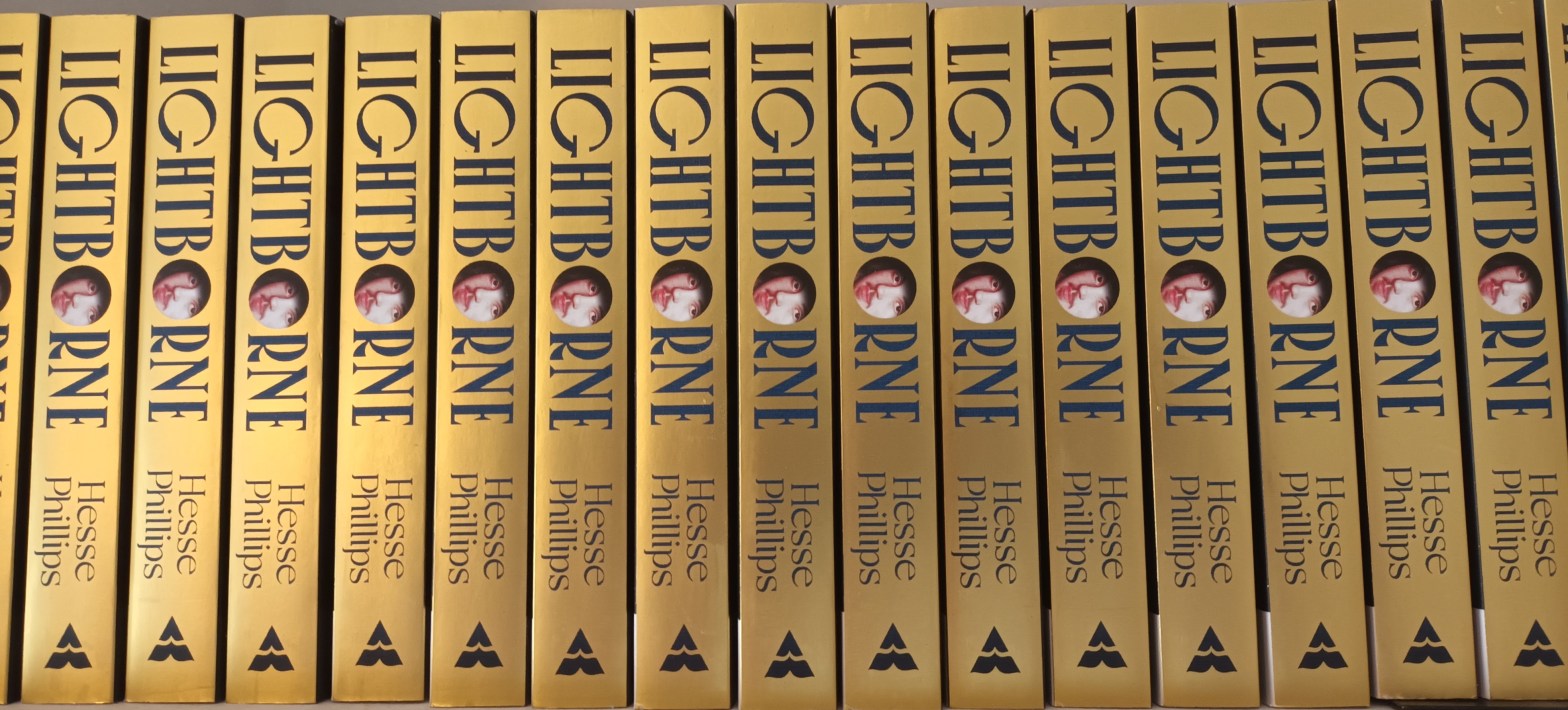
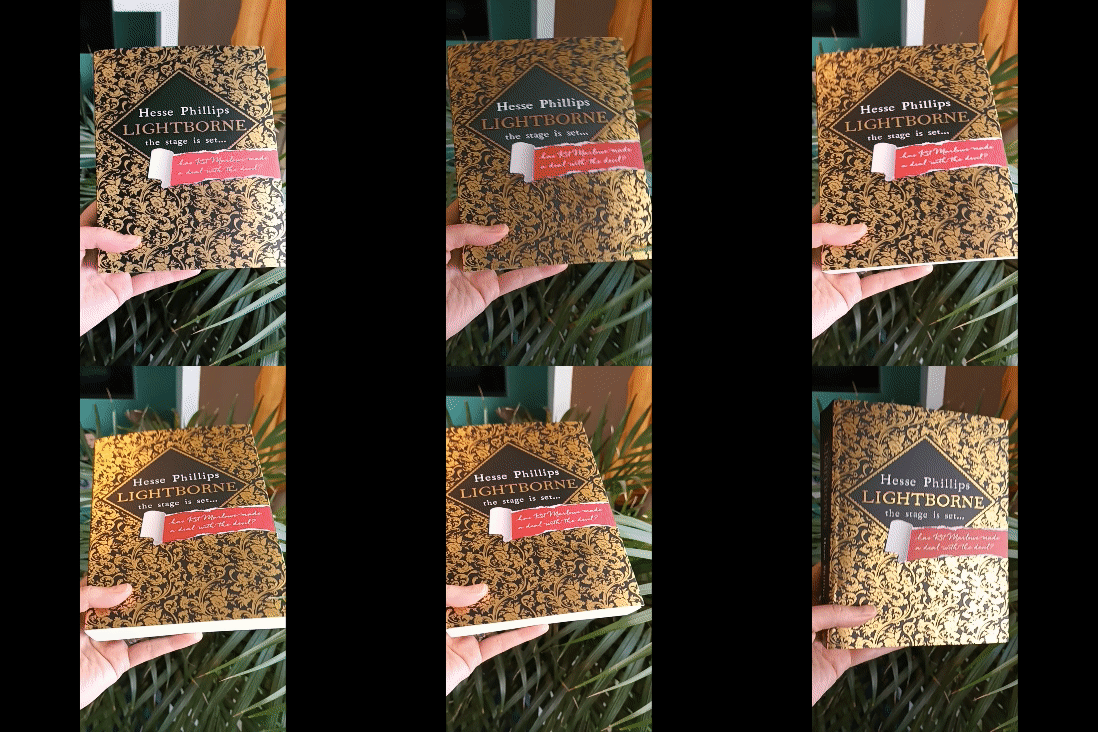
So naturally I was giddy with excitement when my complimentary author’s copies of the forthcoming Lightborne paperback edition showed up at my door the other day. I’ve seen PDFs of the new cover and therefore thought I knew what I was getting into when I opened the box, but no PDF could possibly do it justice.

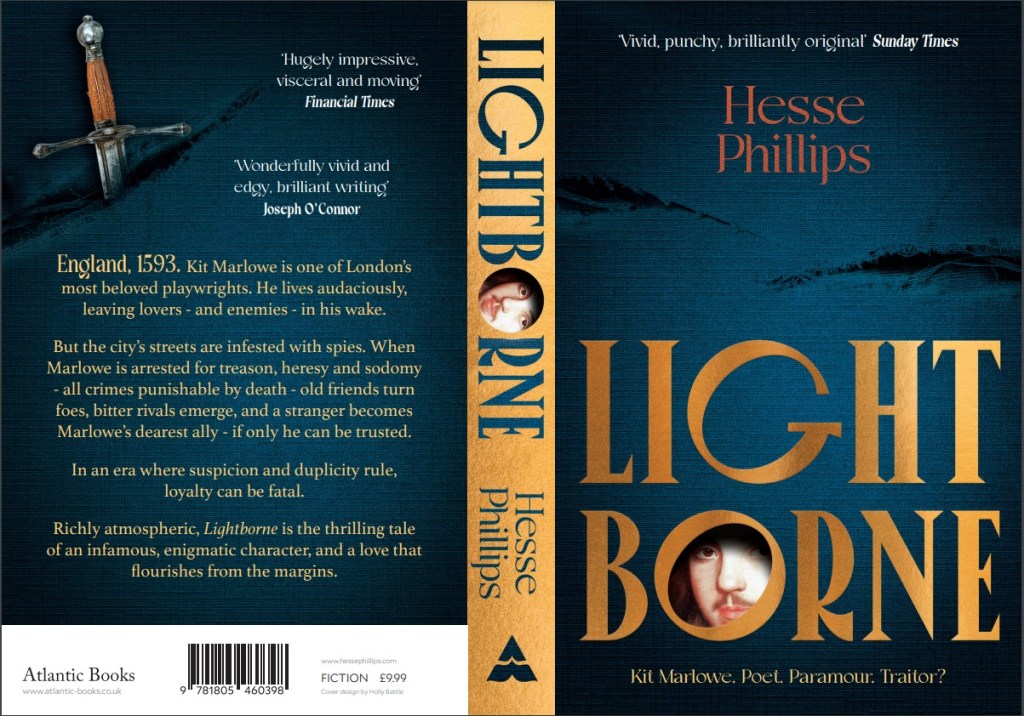
I think someone in the design department at Atlantic Books must have heard me going on and on about how much I loved the gold on the “deluxe” edition cover from last year, because they went all-out with it. Believe me when I tell you, this baby glows.

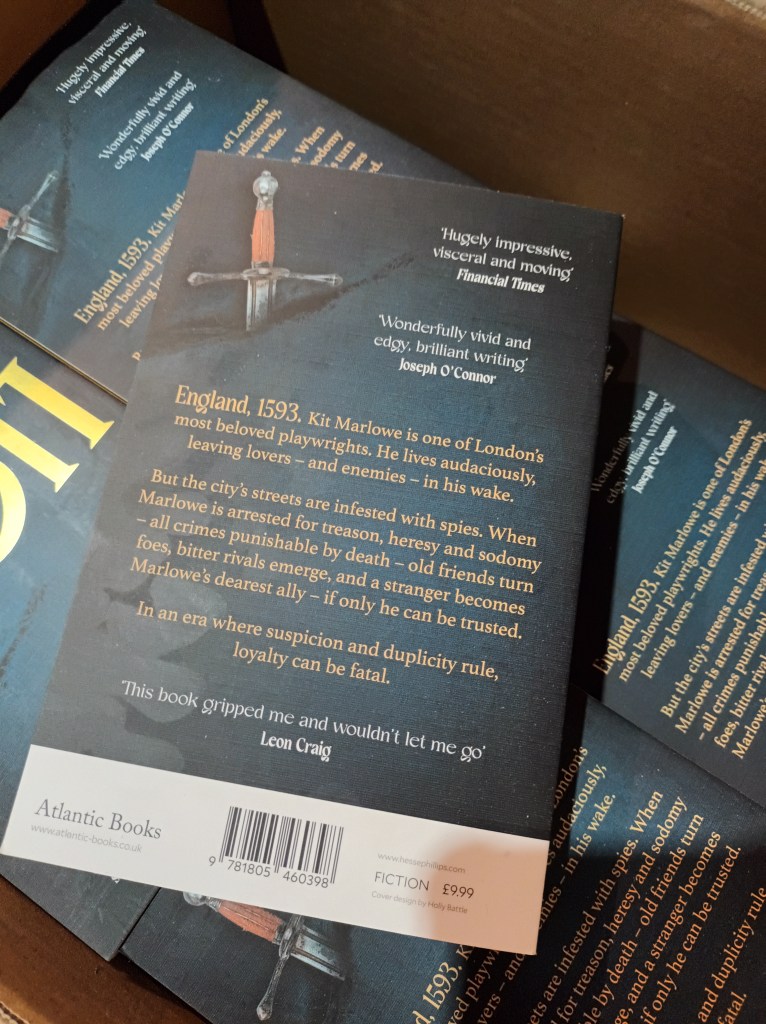
And it looks pretty great from the back too.

With the official paperback launch date set for 6 March, preorders are of course available (and encouraged!) But for those who prefer ebooks, the ‘Zon is also running a Kindle Deal on Lightborne for the month of February, where you can score a copy for just £2.19.

It should probably go without saying that all of this is coming at an exceedingly weird time, particularly yet not exclusively if you’re American like myself, and particularly yet not exclusively if you happen to also be queer, and writing queer books, and plan to continue being and doing all of those things for as long as you have breath in your body. I am glad, at the very least, that I made some difficult but necessary decisions to start out the year, and intend to carry that energy with me into whatever comes next.

The intersection of my self and my obsession with history means I cannot avoid writing about queer survival under truly intolerable conditions – history is sadly saturated with them. It also means, of course, that not everybody makes it out alive, and those that do emerge scarred, battered, and at least a little bit broken. But we will always have a future, even in the bleakest of times. History may often show us in our darkest hour, but it also offers hope: we’ve always been here, and will always be here.

For me, the most important words I wrote in Lightborne were these:

You must live because I love you – because you must be avenged
– because to live is a form of vengeance, when so many have
sought to destroy you
.

Sometimes it comes down to that: staying alive. Because us staying alive really pisses off the ‘phobes.

And if I’ve learned anything about myself this year, it’s that I get a kick out of pissing off ‘phobes.

Lightborne Updates: UK Paperback Sneak Peek

I can’t help but want to talk about perhaps too many things in this post, as I know many of us are still reeling after last week. Perhaps shocked and blindsided, perhaps proven right in the worst way possible, perhaps teetering just above despair. Anyone celebrating is invited to leave at this point. Anyone lashing out, lighting fires, throwing blame at those more vulnerable than themselves, screeching “I told you so” as they rub salt into others’ open wounds, is invited to seek therapy.

It feels very strange and not a little delusional to be talking about my book at a time like this. Not that it doesn’t feel strange to talk about the future at all, given how little we can say for certain about it, other than that things look bleak. They certainly look bleak if, like me, you are a queer author who writes queer books. As I discussed at length in my previous blog post, we could easily be entering a dark age in terms of art and literature, an age in which books like mine will become hotly contested objects. But it’s one thing to worry about whether or not your book might still be legal in your home country a year from now, quite another to worry whether you, as a human being, will also be legal: your marriage, your passport, your family, your friends, your livelihood, your joy, your resistance, your thoughts, your dreams.

However, as a number of other queer authors have also pointed out, there’s no sense whatsoever in backing down before the fight has even truly begun. We are already tired, especially those of us who have been targeted before, but I hope we are far from giving up. Now is a time for those of us who can afford to be loud to scream with all our might.

Knowing my history as a queer person is a double-edged sword, because I’ve seen my community in its darkest hour, but I’ve also seen us emerge from that darkness, again and again. Whatever is coming, we have every right to feel dread in the pits of our stomachs, but also every reason to believe we will find ways to survive it. As Marlowe says in Lightborne, “to live is a form of vengeance, when so many have sought to destroy you.”

As long as humanity lives, we live. I’m sure it drives those who hate us crazy.

All that said, I’m extremely lucky to have exciting things to look forward to in 2025, among them the paperback launch of Lightborne in the UK. Come what may, in March there will be a whole new edition of the book out in the world, with a stunning new cover to rival the old one.

And now, without further ado:

Courtesy of Atlantic Books

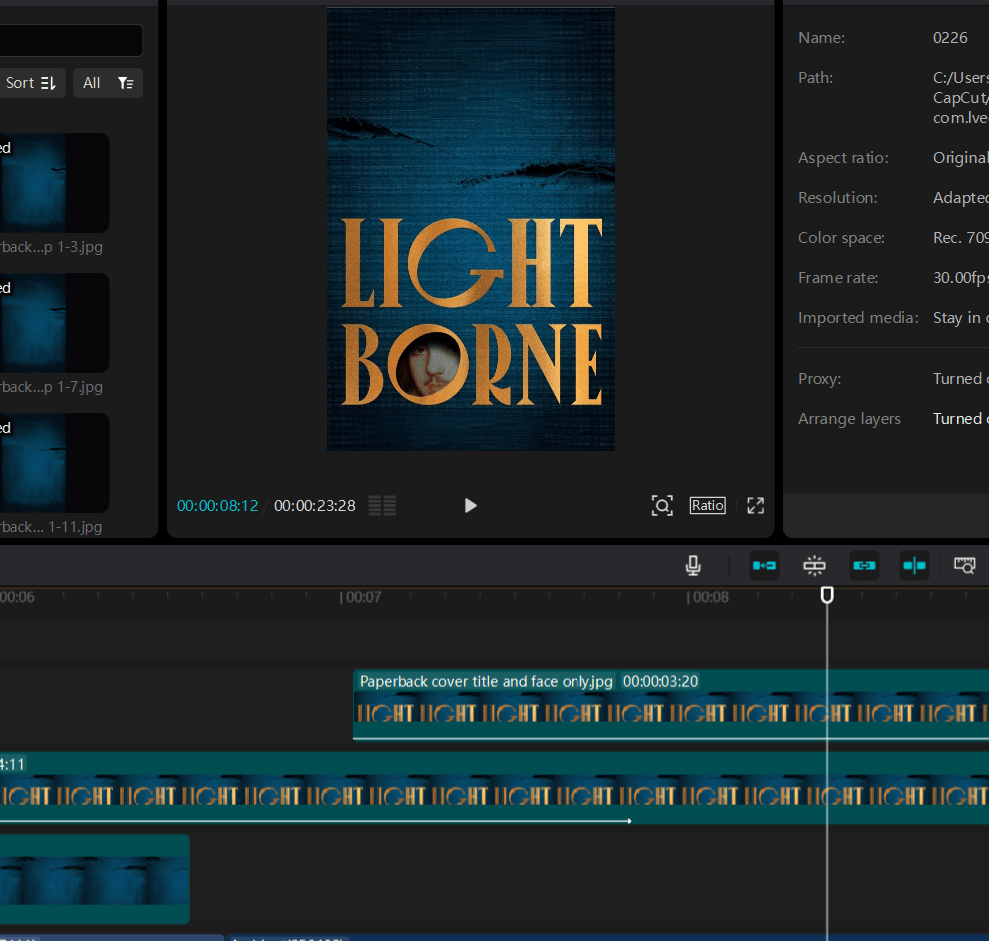
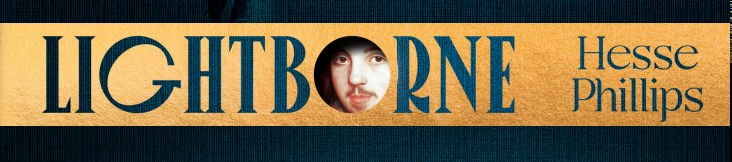
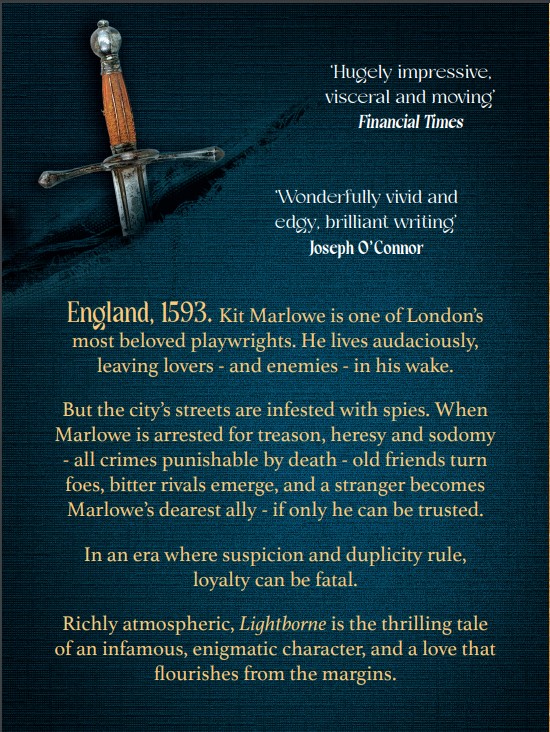
We still have the beautiful gold accents that gave the original cover such a bold presence on the shelf, but now with a much darker, moodier atmosphere, and even a subtle appearance from Kit Marlowe himself. I chose this design among several options – it wasn’t easy, as they were all impressive – but I loved this one for that rich blue tapestry background, and the vintage feel of the design.

The back cover, I should add, is equally gorgeous:

Courtesy of Atlantic Books.

Those who have read the book already will surely recognize Frizer’s knife peeking out! I fought for that knife, I will say, and I’m so glad I did. Authors – this is me advising you to fight for things you want on the cover. You might not get them, but you’ll have no regrets.

I’m beyond excited to see the paperback in its full glory, as I hope readers will be as well. Whatever dangers are barreling down at us from the future, I hope we’re able to find reasons to stay excited and engaged. After all, the world desperately needs that from us. Our anger and outrage is necessary, but so is our hope, our creativity, our joy.

It might mean the difference between simply getting through whatever comes next, and doing the work that desperately needs to be done: of building a better world than the one we started with.

Lightborne Launches Stateside

I look back on the past version of myself who brought their laptop to their US book launch with the intention of keeping their blog updated and think, “Oh, you sweet summer child – so innocent, so full of big dreams!” In the end, I didn’t have time to unpack the laptop, let alone to sit up through my jetlag reaping the whirlwind of emotions for content. Even now, much of my trip to Boston, Massachusetts remains a blur of happy reunions with old friends, rooms filled with watchful, attentive faces, visits to old stomping grounds, old favorite beers in old favorite bars, new favorite books bought in new favorite bookshops.

At least one thing is clear: I’m extremely lucky. Not everyone gets their dream launch in their dream location with their dream conversation partner; not everyone gets to sit on a panel of rockstar authors and read their work to a packed audience. But I’ve been lucky for quite some time. I was lucky twelve years ago, when I discovered GrubStreet Boston’s Novel Incubator program and joined a community full of lifelong friends who all share a passion for the craft of writing. I was lucky to have some of the best writing instructors out there, Michelle Hoover and Lisa Borders, who gave me all the support I could possibly need.

There’s a bittersweetness to it all. Returning to the last place I called home just as the whole country is turning its gaze towards the abyss infuses even joyful moments with a sharp tang of dread. I fear for many of the friends I left behind, nearly all of whom said the same thing as we bade each other goodbye: “If the shit hits the fan, I’m coming to stay with you!” They were only half-joking, I could tell, just as I was only half-joking when I answered of course they could stay with me, I’d take every single one of them in if I could. Many told me how lucky I was to have gotten out when I did, how lucky I am to be so far away, which is a hard thing to hear, given how much I’ve missed them, and how much I’ve missed the place where, they say, I’m so lucky to no longer live.

I’ll have more to say on all of that later. For now, I’d like to just hang onto the excitement and gratitude of these days. I’d like to thank Nicole Vecchiotti and Timothy Deer, the organizers of Craft on Draft, as well as our hosts at Trident Booksellers, our Master of Ceremonies Cameron Dryden, and my fellow panelists Thérèse Soukar Chehade, Henriette Lazaridis and Janet Rich-Edwards. Thanks to Porter Square Books and to Marketing Director Josh for throwing Lightborne a launch party to remember, and to my conversation partner Michelle Hoover for knowing exactly the right questions to ask. A huge thanks to my publicist Meghan Jucszak at Pegasus Books, who helped put everything together.

A final shout-out also to the many dear friends who rallied together to give Lightborne the send-off I’ve always dreamed of. I told many of you that we have to come back and do it all again soon, and I mean it. This is a world that needs more art, more joy, more luck to go around. I sincerely hope we get to share in that.

Lightborne’s USA Launch Schedule & Event Registration

At long last I can finally announce my US “mini-tour” plans – “mini” because it is indeed very wee, but “tour” because it requires way more travel than the average book tour to pull it off. Though returning to my old stomping grounds in Boston, Massachusetts from my new home here in Spain gets more complicated (and expensive) every year, it has always been my dream to launch Lightborne in the same city where it first leaped onto the page – albeit in a very different form than now.

It’s been over ten years since that first version came about, but finally, this October, I’ll be making a few stops around the Boston area to celebrate Lightborne’s US birthday:

October 22, 2024: “Craft on Draft” at Trident Booksellers, Newbury St. Boston, MA at 7pm – 9pm.

From the organizers: “Craft on Draft is a reading series created and managed by alumni of GrubStreet Boston’s Novel Incubator program devoted to great fiction and the mechanics behind it. This session’s topic: ‘Whose History?’ asks, can historical fiction radicalize and revolutionize? Come hear four authors discuss how they’re working to change mainstream perceptions of historical fiction by broadening the genre to include queer folx, non-white/non-Occidental people, even the ‘ordinary,’ non-aristocratic, outsiders, boundary pushers, changemakers… Spend an evening discussing stories that go beyond dead kings and queens to hash out what’s at stake in our reimagining of the past.  

With Hesse Phillips (Lightborne), Henriette Lazaridis (Last Days in Plaka), Therese Soukar Chehade (We Walked On), and Janet Rich Edwards (Canticle). Moderated by Carla Miriam Levy.”

Free and open to all, but please do register.

October 23, 2024: Lightborne Official US Launch at Porter Square Books: Hesse Phillips in Conversation with Michelle Hoover, Massachusetts Ave. Cambridge, MA at 7pm – 8pm.

From the time Lightborne was still a sprawling mess of loosely connected, overly ambitious ideas, I’d always dreamed of one day having a launch at Porter Square Books’ Cambridge location, just down Spring Hill from my old apartment in Somerville. They’ll be in brand new quarters by the time I finally get to do it, but no matter – we’re still in for a great evening in one of the most vibrant independent bookstores in the Boston area. With lively discussion led by Michelle Hoover, host of The 7AM Novelist Podcast, founder and instructor of the Novel Incubator Program at GrubStreet Boston (where Lightborne was born) and author of Bottomland and The Quickening; along with a reading (or two) performed by yours truly.

Free for all to attend, but please register here to help out our hosts!

Before I jet back across the Atlantic, I’ll also be stopping in at all my old favorite book shops to load up on probably more books than luggage weight restrictions will allow, and to leave a trail of signed copies in my wake. You’ll soon be able to pick one up at Porter Square Books’ locations in Cambridge or Boston, The Harvard/MIT COOP, Trident Booksellers, All She Wrote Books, or the Harvard Book Store.

This post will be updated with further information as it becomes available, so do check back. I hope some of you out there can join me on what will be an incredibly special trip – a return to the city I still often think of as home, even from the other side of the world, and a chance to see friends new and old, some for the first time in years.

Sixteen-Year-Old Me Could Never

A personal post to see out Pride Month 2024.

It’s summer, 1997. My sixteen-year-old self is in their room, on the phone with their best friend, who says she isn’t interested in being friends anymore.

(This is a conversation I’ve been dreading, having sensed it coming for months – the gradual tapering off of phone calls, the resignation in her voice when I cancel plans, again. My best friend won’t fight for me. Truth is, I don’t even want her to.)

She says, “It seems like writing a book is more important to you than having friends.”

At sixteen, I didn’t have a lot of friends to spare. For starters, though I attended high school in downtown Pittsburgh I lived way out in what everyone referred to as “farm country,” a two hour bus ride away. And then there was the truly unconventional way I spent my free time. Every afternoon, as soon as I got home from school, I’d rush upstairs to my desk and barely move for the rest of the night. I was the only person I knew who wrote books – for fun.

It certainly couldn’t have looked like fun, from the outside. Most nights I ate dinner at my desk like some sad corporate drudge, squeezing in every last minute I could. Some time after midnight I’d crash into bed, get maybe four hours of sleep in before my mother woke me by shouting my name downstairs. Then another two hours to school, in the dark, during which I might write six pages in my head, tucking them into a mental folder to be opened again at the end of the day.

God how I miss that superpower now: the ability to hold whole texts in my memory, to summon them up hours or even days later with all the revisions and additions intact. It would really come in handy.

It came at a cost, of course. I expended so much mental energy keeping stories on ice that I had little left over for “normal” sixteen-year-old concerns. I was emphatically not a “normal girl,” and proud of it. But everything I knew about girlhood came from stories I absorbed through books and media, which were nothing at all like my reality. Girl stories, I thought, were about going to the mall, vying for the attention of boys and counting calories, despite the heroine always being thin, blonde, popular; or maybe unpopular but thin anyway, pretty if she takes her glasses off. Before the story ended, she would learn lessons about the importance of loyalty, forgiveness, sacrifice; the transformative power of a new dress, the transformative power of dropping five pounds.

Above all, in every story, the girls were always surrounded by friends, typically three or four, each with her own small, inoffensive quirks, who were there when the heroine’s story began and would be there till the end, standing by her side with blank smiles, their own stories (if they had them) tidily and expediently resolved.

In hindsight, I think girl stories made me uncomfortable because they were all about being visible, about being consumed. The heroine survives or triumphs because she steps out into the world with arms wide open, having done the hard work of changing herself to please others, or (more rarely) the even harder work of accepting herself.

You could say that girl stories are often “coming out” stories.

Girls almost never figured into the stories I wrote at sixteen. The book I’d spent my whole summer working on, instead of hanging out with my best friend, was a sprawling bildungsroman, loosely based on a true story, about an autistic painter who escapes a Soviet mental institution and defects to the United States. The next summer it would be a historical thriller set in 1899 about a traumatized gay man who builds a vast city underneath Manhattan as a respite from the surface world. After that, there would be a fantasy trilogy in which Lucifer and Jesus Christ are the same entity, and in order to save humanity, they must rally angels and demons alike to kill a smite-happy God.

All my stories were about escaping, defecting, retreating, un-making, un-doing. They were the opposite of “coming out.”

On a class trip in 1997, looking like a roly-poly Robert Smith.

At sixteen, I didn’t yet know I was queer. Correction: I’d known I was queer even before I’d ever heard the word, but over time I’d managed to wipe that knowledge from my mind. It was a matter of survival. I lived in a town with more churches than supermarkets. Not long before that fateful phone call with my best friend, I’d had to switch schools for the second time in four years because I was acting out, destroying school property, self-harming. The first time, I had been bullied so badly the teachers themselves had suggested my parents find another school for me – I had been essentially run out of my home town, or at least my public school district.

At sixteen, I didn’t yet know I was queer, because even though I compulsively wrote characters who loved or existed unconventionally, changed genders or were genderless, I didn’t live in a world where queer was something I could be. Queer was for other people. (It was the 1990s, so, tragic, doomed people.) But writing was a place where I could safely try on different versions of myself. Some of my characters were parts I stepped into as if for the stage. Others stepped into me. Gradually, I came to recognize which ones brought me strength, or confidence. I started to crave their visitations, to grieve them when they were gone.

My senior year of college, one character would set up shop in my head, and not leave until I’d done him justice. An Elizabethan playwright whose name I’d heard in my early teens, and whose story I’d never been able to forget – Christopher Marlowe – came storming out of one of my mental folders, dragging four-hundred years’ worth of queer rage at having to escape, to hide, to un-make ourselves along with him.

Ultimately, it would take me twenty years of multiple false-starts, failed attempts and “life stuff” delays, but when the dust finally settled, I would be holding Lightborne, my first published book. And I would not be alone: standing to either side of me would be the friends who had never stopped cheering me on, the fellow writers who gave me their time, the partner who gave me all the love and patience I could possibly ask for. I would not be alone in the dark any longer.

Up in my bedroom on the old cordless phone, my sixteen-year-old self has no idea how long it will take, or how much will be lost and gained along the way. They can’t imagine going more than a day without writing, but being published isn’t necessarily part of the plan. They write to live.

When their best friend says, “writing a book is more important to you than having friends,” she sounds as if she pities them. Maybe it is sad. A sixteen-year-old kid who spends all their free time locked away in a room, and who, to be honest, has only one friend in the world. Reality is, it’s 1997 and this kid should be begging their parents for a pager or Alanis Morissette tickets; reality is, this kid survives one day at a time, by pretending they are a stateless refugee, or the queer king of an underground realm, or some half-divine, half-demonic creature, at war with an unjust God. Reality is, this kid survives by being anything but what the world sees when it looks at them.

So, sixteen-year-old me tells their friend, yes – writing a book is more important to them.

And their heart sinks as they say this, realizing they can never take it back. But after sitting with the dread for a few minutes, in the silence after they hang up the phone, it dissipates. They’re at their desk, in their room. Their book is on the screen in front of them, flickering white, like a hearth that burns cold.

I want to tell them: twenty-seven years from now, I promise you, it will have been worth it.

Not because you’ll publish a book.

Because you’ll find out who your real friends are.

Lightborne Updates: A Big Box of Books

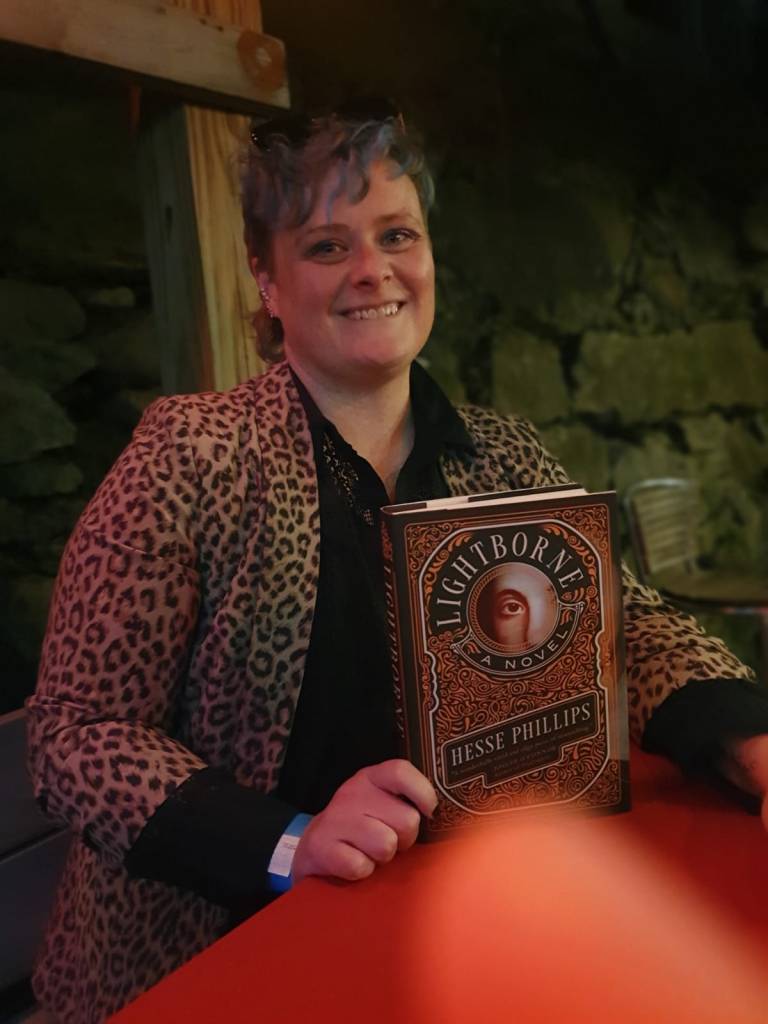
Last Friday I received the most exciting bookmail any author could ask for: a box full of shiny (very shiny) new copies of my debut novel, hot off the press! They even have that “new book smell,” which, IYKYK.

Look at that GOLD!

With my planned trip to London for pub-day fast approaching, just about every friend I talk to asks me whether things are starting to feel “real” yet. What I’ve discovered throughout this whole publishing process is that the goalposts for “real” keep moving the closer you come to the big day. Seeing the manuscript become a digital ARC felt “real,” then holding the physical ARC in my hands felt even “realer”; after that came the final cover design, then the corrected digital proof, and now I sit here with a copy of Lightborne next to me – the same as will soon appear on bookshelves across the UK, Ireland, even as far away as Australia.

It can’t possibly get any “realer” than that, can it? Have we not, at last, reached “maximum realness,” as a drag queen somewhere is probably also wondering right now?

I count on nothing, as far as that is concerned. A year ago, in my naivete, I might have believed that walking into my book launch would be the peak of this whole experience, but now I’m no longer certain there will be such a thing as a peak. (Or a launch, for that matter!) We writers like to impose the rules by which our little worlds are governed onto the “real” world, in the hope that we might feel just a little more in control of our lives, but the shape of a publishing journey is not a single curve building towards climax, probably more like a series of waves of varying lengths. There’s an addictive element to it – the highs are very high, the lows abysmally low. And you never really know when one is going to hit.

For now, amidst so much uncertainty, I’m doing my best to focus on the milestones I can count on happening: the next time I hand a friend or a family member their very own copy of the book and blushingly insist, “You don’t have to read it”; the first time I get to listen to the entire audiobook, and hear award-winning narrator Will M Watt bring Kit Marlowe, Ingram Frizer and Robin Poley to life. The first time I walk into a bookshop and see Lightborne for sale – an experience I’ll be lucky enough to share with my wife, and my parents, who are traveling all the way from Pittsburgh.

For now, please enjoy this extremely amateur unboxing video, in which I finally get to hold Lightborne for the first time – another beginning in a long series of beginnings.

The GOOOOOLLLLLDDDD!