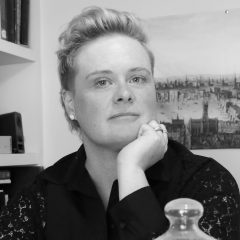

It took me nearly twenty years and at least twice as many drafts to write my first novel Lightborne, which, at the time of writing this, is finally out on submission. Point-of-fact, it isn’t really my first novel, but my twelfth or thirteenth, if you count all of the now-embarrassingly adolescent “novels” I churned out from years 14 to 23 while my peers were out doing fun things, such as, I dunno, hanging-out in malls. What I mean to say is, my journey to this point in my writing career, such as it is, brought me down a long and winding road, possibly longer and windier than average. But there’s an end in sight for me at last. Or possibly a beginning.

In those early years, I shuddered at the thought of anyone else reading my work, as much as I yearned to be a “real writer.” But the road didn’t lead me much of anywhere until I finally got myself some travelling companions. Whatever I’ve learned about novel-writing comes not from solitary hours bent over a desk, but from other people: reading other writers, and sharing my work with other writers. In many cases, these writers were people like me, who had started out writing for themselves long before it ever occurred to them to write for anyone else. Workshops, writing classes, even just having a “writer-buddy” who will support you through the tough times, and keep you on track – all of these things can make the difference between having a book in a drawer and a book that’s ready to submit.
What made the biggest difference, for me anyway, were beta-readers. Beta-readers are fellow writers who will read and critique your full manuscript in exchange for you returning the favor, and they are among my favorite people on Earth. Without the sharp feedback of other writers, I’d still be wandering around the vast wastes of aimless rewriting (Draft 46, Draft 46.2, Draft 46.3, Draft 46.3.1… You get the idea.) Before I submitted my novel to the Irish Writers Centre Novel Fair, through which I met my agent, it was a handful of beta-readers who whipped my book into shape: people who were readers of my genre (literary-historical fiction), who knew something about writing themselves, and whose opinions I trusted.
I have been a beta-reader as many times as I’ve worked with one. That too has been an education: in writing craft, of course, but also in humility, which we writers need to have in scads. When offering criticism or feedback on someone else’s novel (their BABY, for God’s sake!) it was essential for me to learn to silence that little voice that says “I could do this better.” No, I can’t. That story belongs to the author, not to me. Feedback should never be proscriptive, because it’s always based in a subjective interpretation of what the author is trying to get across. Every reader’s interpretation will be a little different. The author’s goal is to create a world that feels open to the inhabitation of outsiders – a time, place, or person that anyone can exist in comfortably for a while.
It took me ages to figure out that the problem with my novel was that it was not welcoming to outsiders. The characters I knew and loved seemed like complete strangers when other people described them to me; the plot-points that I thought ran smoothly were, to others, complicated or obscure. This was devastating to hear at first, but gradually, a new and marvelous excitement kicked in. Now, I could go back into my little world armed with the knowledge necessary to bring readers along with me. This was my opportunity to get to know my characters and my story deeper, to experiment and explore. In time, a new roadmap took shape – rough at first, as are all maps into uncharted territory. But I could see multiple paths ahead.
My experiences with beta-readers absolutely made me a better writer. And it made my book not just a better book, but my book, my vision: a world with open doors, one which nearly anybody can step into, and live.
 HESSE PHILLIPS